

In the rapidly growing world of wellness, performance optimization, and regenerative medicine, peptides have become one of the most talked-about tools for improving recovery, metabolism, body composition, and overall vitality.
But here’s the truth most people don’t hear enough:
Not all peptides are created equal.
And using low-quality or contaminated peptides can seriously undermine your results—and your health.
Let’s break down why sourcing clean, verified peptides is one of the most important decisions you can make.
What Are Peptides—And Why Quality Matters
Peptides are short chains of amino acids that act as messengers in your body. They help regulate:
- Muscle growth and repair
- Fat metabolism
- Immune response
- Inflammation control
- Tissue healing
- Hormone signaling
When peptides are properly manufactured, they interact with your body as intended.
When they’re poorly made, contaminated, or mislabeled, they can do the opposite.
Quality determines whether your peptide therapy is:
✔ Effective
✔ Safe
✔ Predictable
✔ Worth your investment
—or risky and unreliable.
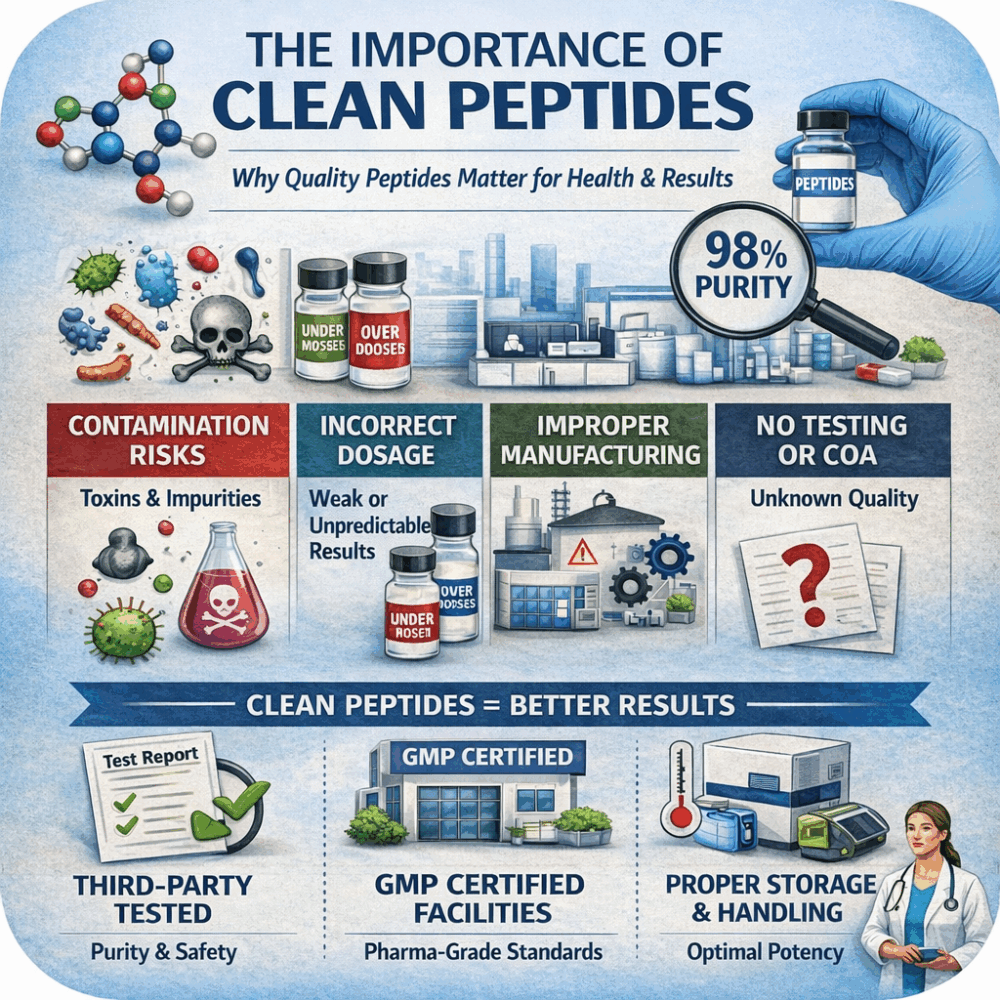
The Hidden Risks of Low-Quality Peptides
Many peptides on the market—especially those sold online or through unverified sources—are produced with little to no oversight.
Here’s what that can mean for you:
1. Contamination Risks
Low-grade peptides may contain:
- Bacteria
- Heavy metals
- Endotoxins
- Residual solvents
- Unknown fillers
These contaminants can trigger inflammation, infections, allergic reactions, or long-term health issues.
2. Incorrect Dosage and Potency
Cheap peptides are often:
- Under-dosed
- Over-dosed
- Inconsistently mixed
- Degraded from poor storage
This leads to:
- Weak or no results
- Hormonal disruption
- Increased side effects
- Wasted money
You may think “peptides don’t work,” when in reality, your product simply wasn’t real or stable.
3. Impure Manufacturing Processes
Reputable peptides are made in certified facilities that follow strict protocols.
Low-quality suppliers often skip:
- Sterility testing
- Batch verification
- Stability testing
- Proper storage controls
Without these safeguards, you’re essentially injecting or ingesting unknown substances.
4. Increased Health Liability
Unregulated peptides may violate standards set by organizations like the U.S. Food and Drug Administration and the United States Pharmacopeia.
That means:
- No safety guarantees
- No accountability
- No quality enforcement
If something goes wrong, there’s often no recourse.
What “Clean Peptides” Actually Mean
When we talk about “clean peptides,” we’re referring to products that meet high pharmaceutical-grade standards.
High-quality peptides should have:
✅ Third-Party Testing
Independent lab verification for:
- Purity (usually 98%+)
- Identity
- Sterility
- Endotoxins
✅ Verified Certificates of Analysis (COA)
A legitimate supplier provides documentation showing:
- Batch number
- Testing results
- Manufacturing standards
- Expiration data
No COA = major red flag.
✅ Proper Storage & Handling
Peptides are fragile. Quality suppliers maintain:
- Cold-chain storage
- Light protection
- Moisture control
- Expiration monitoring
Poor storage = degraded peptides = reduced effectiveness.
✅ GMP-Compliant Manufacturing
Look for peptides made in Good Manufacturing Practice (GMP) facilities. These follow strict guidelines for:
- Cleanrooms
- Equipment sterilization
- Personnel training
- Documentation
This protects you from hidden contaminants.
How Clean Peptides Improve Your Results
When you use properly sourced peptides, you’ll notice the difference.
🔹 Better Clinical Outcomes
High-purity peptides lead to:
- Faster recovery
- More consistent fat loss
- Improved sleep and energy
- Stronger muscle repair
- Better hormone balance
Your protocol actually works as intended.
🔹 Reduced Side Effects
Clean peptides mean:
- Less inflammation
- Fewer injection-site reactions
- Lower infection risk
- More predictable responses
Your body recognizes and uses them properly.
🔹 Long-Term Safety
Well-made peptides reduce cumulative risks over time, making them safer for ongoing optimization and longevity protocols.
This matters especially for clients using peptides for months or years.
How to Protect Yourself as a Consumer
If you’re considering peptide therapy, here are smart questions to ask:
✔ Where are these peptides manufactured?
Look for GMP-certified facilities.
✔ Do you provide third-party COAs?
If they hesitate, walk away.
✔ How are they stored and shipped?
Temperature control matters.
✔ Who oversees the protocol?
Medical supervision is critical.
✔ Are dosages customized?
One-size-fits-all is a red flag.
Why Reputable Clinics Matter
Working with a professional wellness clinic ensures:
- Verified sourcing
- Medical oversight
- Proper dosing
- Ongoing monitoring
- Legal compliance
You’re not just buying peptides—you’re investing in safe, guided therapy.
That difference protects both your health and your results.
The Bottom Line: Quality Is Not Optional
Peptides can be powerful tools for healing, recovery, and optimization—but only when they’re clean, pure, and professionally managed.
Low-quality peptides may cost less upfront, but they often cost more in:
- Health risks
- Lost results
- Frustration
- Long-term consequences
When it comes to your body, shortcuts aren’t worth it.
Choose transparency. Choose testing. Choose quality.



Be the first to comment